
Respect the Meta. Don’t Surrender to It.
by Thomas Lewis

Over the past few weeks, I have been jotting down my thoughts about people’s actions, reactions, and attitudes toward deck selection for Worlds. Watching conversations shift, seeing testing groups pivot overnight, feeling the tension between confidence and doubt as the meta gets blown wide open by the Unyielding Destruction and Equipment Heist bans.
I will not be at Worlds this year. Missing several events throughout 2025 due to medical issues made that decision for me, but stepping back has given me a different vantage point. What follows is simply the result of all of that. A collection of observations, personal experiences, and an amateur’s honest opinion about how we approach the “best deck in the room.”
If you have spent any time around UniVersus lately, especially with Worlds on the horizon, you have probably heard the same conversations on repeat. What is the best deck right now? What is actually winning? What should I be playing if I want to keep up? There is always a gravity to the meta, and the closer we get to any major event, the stronger that pull becomes. It starts to feel like the correct answer is simply to pick up whatever is putting up numbers, sleeve it up, and hope it carries you through tons of rounds.
Right now, that gravity is pointed squarely at the big names. People are staring down characters like Deku, Mikasa IV, Rodan, and Godzilla. There are more, of course, but you get the idea. These are the decks people expect to see. These are the lists being tested over and over again. Players are running constant games, forcing reps, trying to grind comfort into themselves because they do not want to be the person who showed up unprepared for the “best deck in the room.” Even when they are not excited about doing it.
I have been there, many of us have been there in and out of Universus.

Let’s use Atlanta Regionals 2025 as an example. I picked up Pony on Earth because it was clearly one of the strongest decks in the room. On paper, it did everything right. The numbers were there. The matchups were solid. The ceiling was obvious. In practice, it was fine. Even in the tournament, it was okay, but it felt soulless. A win didn’t really feel like a win, especially when one of my opponent’s scooped up game one and just left saying he wasn’t having fun with the game anymore.

At the same time, I had a Keyleth on Earth list that I had won locals with and tested extensively. I knew that deck. I enjoyed that deck. I had real confidence in that deck, but I convinced myself that bringing the “best deck in the room” was the more sensible choice.
The problem was not that Pony was bad. The problem was that I was not invested.
When I lost, it was a shrug. We moved on to the next round. I started 2-1-1, fell into the draw bracket, and eventually died to control decks. Would Keyleth have performed better? Maybe. Maybe not. But I know my motivation would have been different. I would have been fighting for every round instead of just piloting something efficient. Passion matters more than we give it credit for in long tournaments.
Now, to be clear, there is real value in knowing what the best deck is. There is real value in understanding why it is strong, how it sequences, what the most ideal lines look like, and where it can be broken. Some players genuinely perform better after they have piloted a top deck for a while. They develop a tangible familiarity with it, which not only helps them play it more cleanly, but also helps them play against it with more confidence. That knowledge matters.
But knowing the best deck and playing the best deck are not always the same decision.
There is a difference between studying the meta and surrendering to it. You can respect what is powerful without abandoning what you are good at. You can understand the top tables without feeling obligated to copy them.
That distinction has shown up in my own results.

Some of my best finishes have come from decks that were not considered top tier at the time. For one example, I once played Jun on Water at a Local Championship and finished second overall. That result was not because Jun was secretly the best deck in the room. It was because I knew that deck inside and out. I knew which hands were keeps and which were traps. I knew when to slow the game down and when to push. I knew my damage thresholds and my defensive pivots. Even in matchups that were supposed to be bad, like facing Deku on Void, I felt in control. I understood my outs. I understood what I needed to see. Even in the smallest vacuum, I knew how to navigate toward a win condition because I had put in the reps.
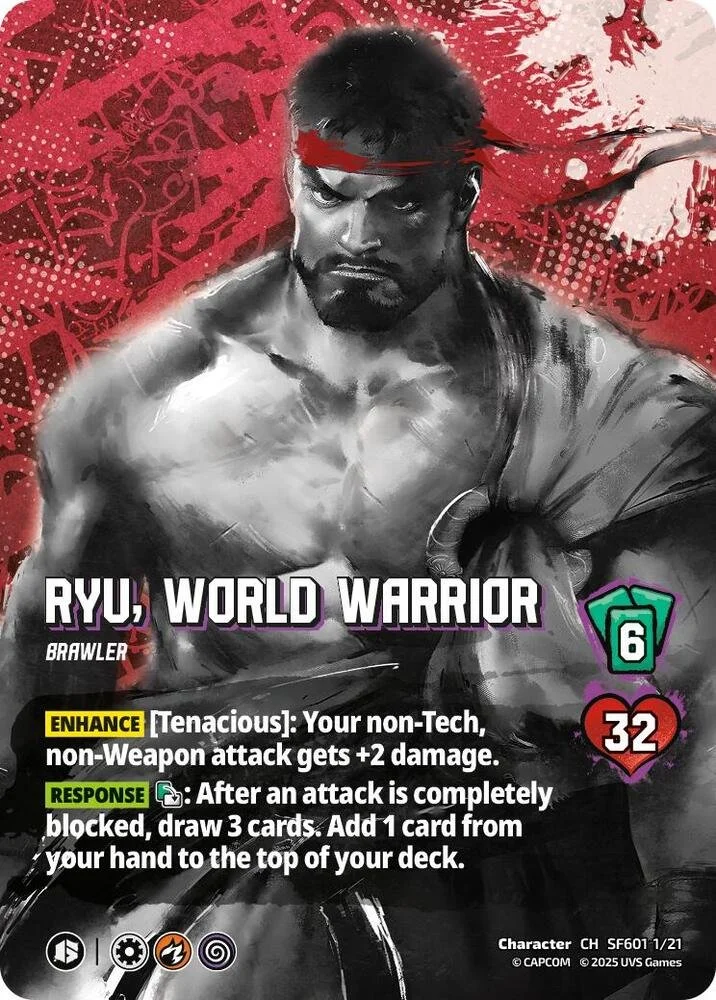
That kind of comfort does not show up on a tier list, and neither does experience. We have all seen it. Tim Keefe brought Ryu to Atlanta Regionals in 2025 and nearly top cut. It was not because the deck suddenly became broken. It was because Tim’s experience compresses decision making compared to the average player. Removing hesitation and letting him recognize patterns faster than the person sitting across from him.
An experienced player on something slightly off-meta can navigate tight games because they have seen those board states before. They know when to pivot, when to take a risk, and when to pass the turn and live to fight another one. Meanwhile, a less experienced player on the “best deck in the room” can still stumble through sequencing simply because the reps are not there. Deck choice matters, but experience multiplies whatever deck you bring, and experience almost always comes from playing something you have truly invested time into, so the real question becomes this. If it is the “best deck,” is it automatically the deck you should be playing?
The answer is not as simple as yes or no.
There is a difference between choosing a deck intentionally and choosing one out of fear of being left behind. There is a difference between respecting the meta and reacting to it and let’s be honest, swinging too far in either direction is a mistake.
Ignoring the meta is not bravery. It’s negligence. Pretending you do not need to know what is strong or popular is how you start a tournament mentally 0-4 before you ever present your character. Smart players pay attention. They track results. They identify which mechanics are overperforming. They notice which defensive packages are common, which foundations are everywhere, and which damage profiles are pushing through blocks right now. That awareness informs smarter deck choices, sharper tech decisions, and cleaner in game adjustments.
UniVersus has always rewarded familiarity just as much as raw power. Playing what is strong is important. Playing what you know is often more important.
There is a difference between knowing a deck’s card list and knowing a deck. Knowing how it feels when you are behind. Knowing which hands are keepable under pressure. Knowing when to push for lethal and when to hold back because your opponent’s symbol has access to that one reversal you have been tracking all game. Those instincts are not downloaded overnight just because a deck won a regional. They are built over reps. They are earned.
The meta can tell you what is good. It can tell you what people are afraid of. It can tell you what you are statistically likely to face at Worlds. What it cannot tell you is how you are going to feel when every decision matters and the room is “quiet”. It cannot tell you whether you will hesitate because you are still thinking through lines instead of recognizing them.
This is where the real balance lives.
My Closing Thoughts
Engage with the format intelligently. Adjust your foundations. Adjust your sideboard. Respect what is strong. Identify what is thematically rising. Maybe aggression is king. Maybe control is quietly thriving. Maybe high blocks are the new low blocks. Maybe foundation hate is everywhere. Understand those patterns.
Then decide honestly whether you are better served riding that wave or trusting the deck you have already invested in.
Because at the end of the day, the best deck in the room is not always the one that won in Buffalo or Glasgow.
In Universus, the best deck is very often the one you understand the most.